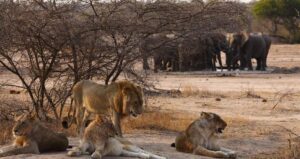
Tanzania luxury safari starts with understanding that the Great Migration isn't a single event you either catch or miss. It's a year-round circuit, roughly 1.5 million wildebeest and 200,000 zebras moving with the seasonal rains across the Serengeti and into Kenya's Masai Mara, a clockwise loop that takes twelve months to complete. Calving season in the southern Serengeti runs January through February, when 8,000 calves are born daily. River crossings at the Mara happen July through October, crocodiles holding position at the crossing points. Each stretch of that cycle offers something different, which means the itinerary has to be built around exactly what you want to witness, not just when it's convenient to fly.
Tanzania also holds Ngorongoro Crater, a 100-square-mile volcanic caldera containing the densest concentration of wildlife anywhere in Africa, and Kilimanjaro, at 19,341 feet the tallest free-standing mountain on earth. Then, three hours by ferry or twenty minutes by private charter flight, there's Zanzibar: an Indian Ocean archipelago built around a 16th-century Omani stone city, with water that turns the same impossible blue as Bora Bora. A well-designed trip treats the safari and the coast as two distinct halves of the same journey, not an afterthought tacked onto the end.
At a Glance
Tanzania spans 364,898 square miles in East Africa, south of the equator, bordering Kenya, Uganda, Rwanda, Burundi, the Democratic Republic of Congo, Zambia, Malawi, and Mozambique. Julius Nyerere International Airport in Dar es Salaam (DAR) handles the main international arrivals, while Kilimanjaro International Airport (JRO) gets you directly into the northern circuit. Zanzibar International Airport (ZNZ) connects by short flight from both Dar es Salaam and Nairobi.
The northern circuit, Arusha, Tarangire, Lake Manyara, Serengeti, Ngorongoro, covers the primary wildlife destinations across a 5 to 7 day loop. Every safari here runs guided, national park regulations require it, which means the quality of the guide is the single biggest factor separating a good trip from an exceptional one. A private guide who's worked a specific stretch of the Serengeti for years, rather than a rotating group leader, changes what you actually see each day.
Travel Offerings
- Luxury Safari & Wildlife Expeditions
- Custom Private Travel
- Kilimanjaro Trekking
- Coastal & Island Travel (Zanzibar)
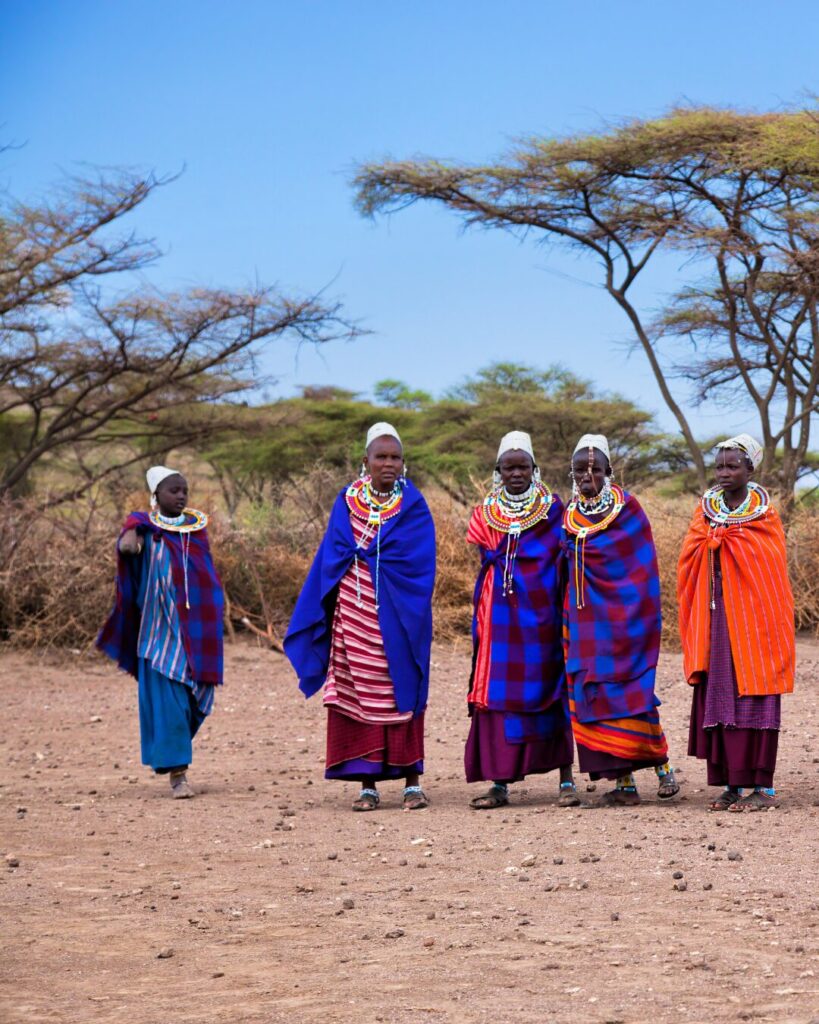
- Cultural & Maasai Heritage Experiences
- Small Group Travel
Travel Guide
- U.S. citizens need a valid passport and a tourist visa, available on arrival at Kilimanjaro and Dar es Salaam airports ($50 USD), or in advance through the Tanzania e-visa portal (evisa.go.tz).
- Yellow fever vaccination is required if arriving from a yellow fever endemic country.
- Currency is the Tanzanian shilling (TZS); USD is widely accepted on safari and in tourist areas.
- Safari vehicles run 4WD with pop-top roofs built for photography.
- Tipping for guides, trackers, and camp staff is standard and expected; $15 to $25 per person per day for the guide is a reasonable baseline.
- Ngorongoro Crater: a full day descending into the 100-square-mile caldera stands as the single most reliable wildlife experience in Africa. The crater floor holds permanent populations of lions, elephants, Cape buffalo, black rhinoceros (critically endangered, roughly 26 remain in the crater), hippopotamuses, and flamingo flocks on the soda lake. The black rhino, one of fewer than 5,000 left in the wild globally, is most reliably seen here of anywhere on earth.
- The Serengeti: the plains stretch across 5,700 square miles, and where you position within the park depends entirely on migration timing, best worked out with a guide who tracks the herds' movement in real time. The central Seronera region delivers reliable big cat sightings year-round.
- Mara River crossings (July through October): these require positioning along the riverbank for hours at a time and real patience, though an experienced guide can often read the wildebeest's behavior before they commit to crossing.
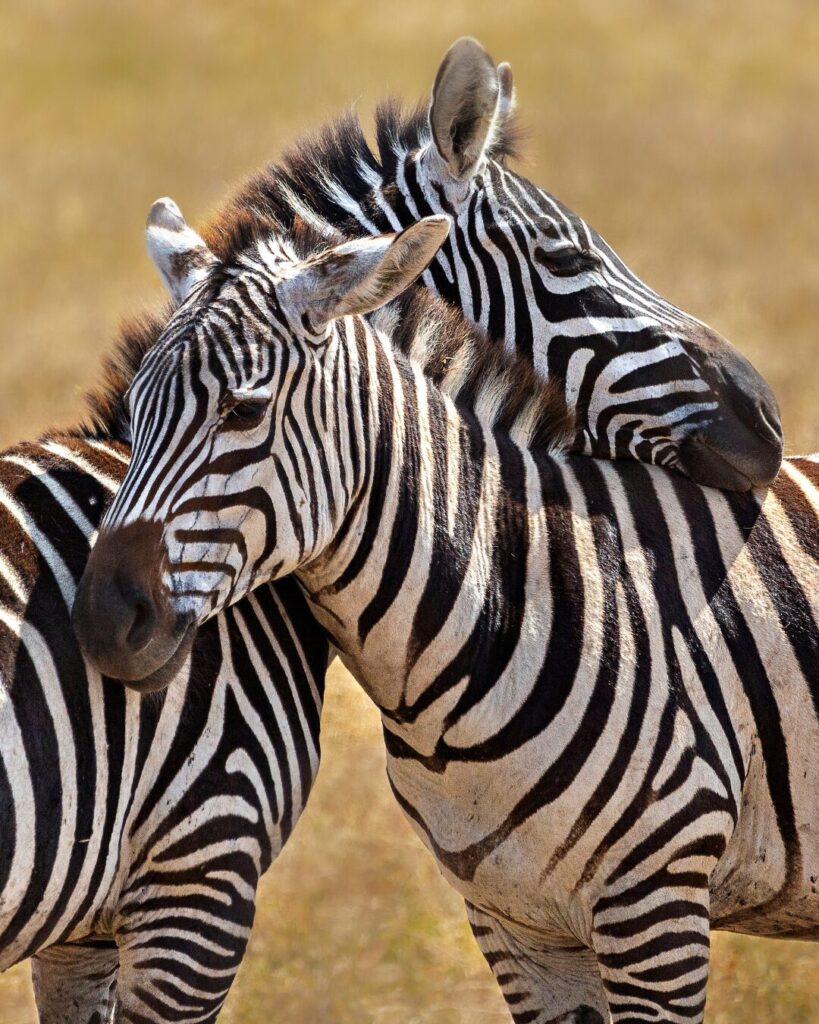
- Tarangire National Park: far less visited than the Serengeti and Ngorongoro, and home to the highest concentration of elephants in Tanzania outside Amboseli.
- Zanzibar's Stone Town: a labyrinthine 16th-century Omani trading port, UNESCO-listed, centered on the Slave Market memorial and the House of Wonders, best explored with a private historian guide who can walk the layered history rather than just the architecture.
- Same-sex relationships are criminalized in Tanzania, including Zanzibar, under the Penal Code, with penalties of up to 30 years in prison.
- Enforcement is real, not merely theoretical; there have been documented arrests and prosecutions.
- LGBTQ+ travelers should exercise extreme discretion in every public setting.
- Tanzania isn't recommended for travelers unwilling to remain fully private about LGBTQ+ identity throughout the trip.
- The safari and wildlife experiences themselves are extraordinary. The legal and social environment is a separate and serious matter, worth planning around honestly rather than glossing over.
- Dry season (June through October) is the strongest window for wildlife viewing across every park: vegetation thins, animals concentrate around water, and the Mara River crossings happen.
- July and August mark peak season, and the prime Mara crossing camps need booking 6 to 12 months ahead.
- Calving season (January and February) in the southern Serengeti's Ndutu area matches the peak season for wildlife density, at a noticeably lower cost.
- The long rains (March through May) limit access to some camps; the short rains (November and December) are brief and generally manageable around.
- Zanzibar's best months run June through October and December through February.
7-Day Itinerary
Northern Tanzania Circuit & Zanzibar
Day 1 — Arrive Kilimanjaro / Arusha
Fly into JRO (via Amsterdam, London, Doha, or Nairobi). Transfer to Arusha. Afternoon at leisure — the Cultural Heritage Centre in Arusha has a good Tanzanian art and Maasai artifact collection. Briefing with your guide on the circuit ahead.
Day 2 — Tarangire National Park
Two-hour drive south to Tarangire. Full day game drive — the Tarangire River in the dry season concentrates elephant herds of 100–300 animals. The baobab tree density here is unlike anywhere else in the northern circuit. Lion prides and leopards are resident. Return to Arusha or overnight in Tarangire.
Day 3 — Ngorongoro Crater
Drive west to the crater rim (2.5 hours from Arusha). Descend into the crater for a full day — the 2,000-foot descent takes 20 minutes by 4WD. Crater floor game drive: black rhino tracking, lion prides, hippopotamus pools, flamingo lagoons, Cape buffalo herds. Ascend by late afternoon. Overnight on the rim for the crater view at sunrise.
Day 4 — Serengeti: Central
Drive west into the Serengeti (3 hours from the crater). Game drive en route through the Ngorongoro Conservation Area. Arrive Seronera by midday — the central Serengeti's cheetah population is the most reliably viewable in Africa. Afternoon and evening drives.
Day 5 — Serengeti: Migration Position
Positioning game drive depending on migration timing. July–October: north to the Mara River region for crossing potential — position early and wait. January–February: south to Ndutu for calving season — predator-prey interactions are constant. Full day in the field.
Day 6 — Fly to Zanzibar
Charter flight from Serengeti airstrip to Zanzibar (1–2 hours depending on routing). Stone Town in the afternoon: the narrow alleyways of the Omani medina, the Slave Market memorial (the Anglican Cathedral sits on the site of the last open slave market in East Africa, abolished in 1873), and the seafront.
Day 7 — Zanzibar / Depart
Morning: Spice Farm tour north of Stone Town (30 minutes) — cloves, vanilla, cinnamon, and black pepper growing in a working farm. The spice trade made Zanzibar one of the wealthiest ports in the Indian Ocean in the 19th century; the farms provide context for the island's history. Afternoon at Nungwi Beach (north tip) or Paje Beach (east coast) — the Indian Ocean water in Zanzibar is specifically warm and calm on the west side, specifically clear on the east. Fly home from ZNZ via Dar es Salaam or Nairobi.