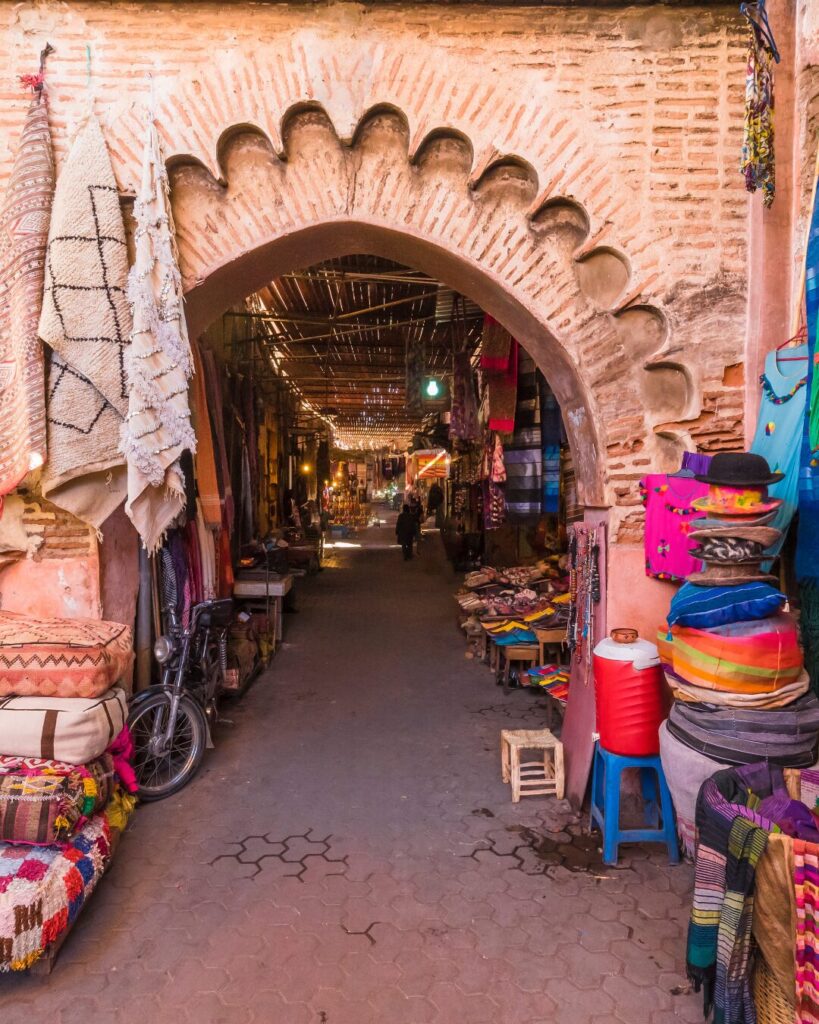
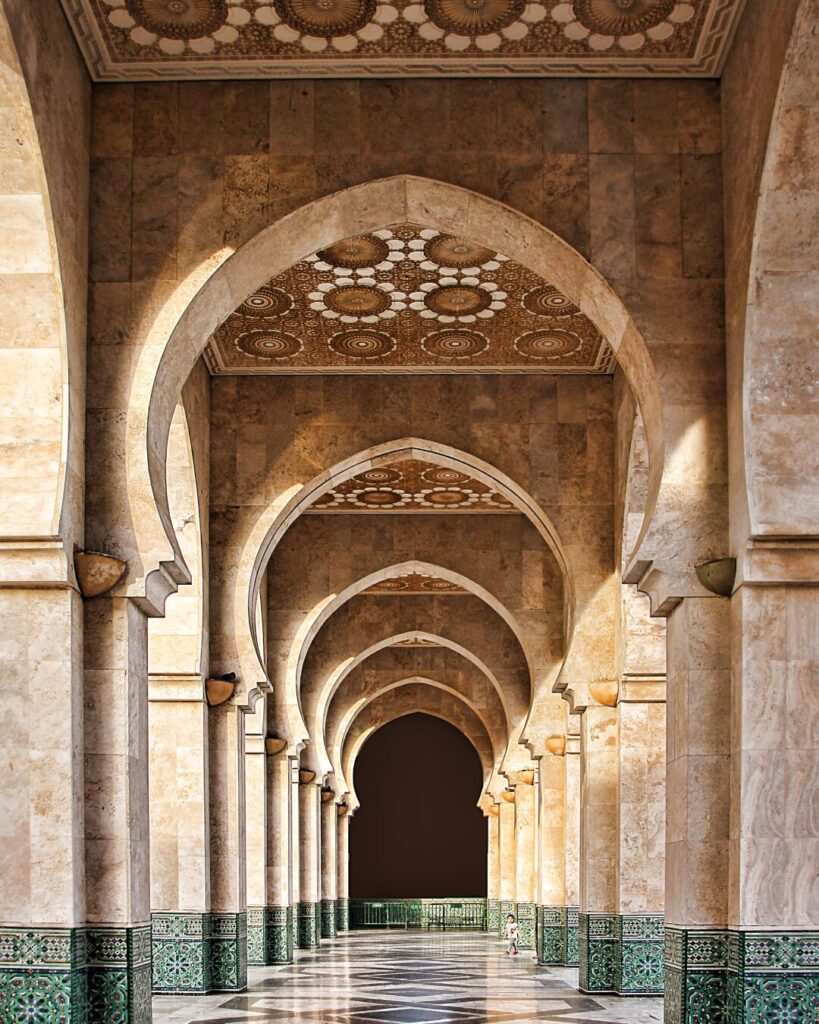
Morocco hits you immediately: the color, the noise, the architecture of the medina arriving all at once, faster than it can be processed in pieces. Buildings the color of dried clay, carved stucco doorways, light falling through latticed screens. This isn't a gentle introduction. It's Morocco at full volume, and the difference between a good trip and an exceptional one comes down almost entirely to who's walking you through it and how the days are paced.
The country runs through several distinct registers, and a well-built itinerary moves through more than one. The blue city of Chefchaouen sits in the Rif Mountains. Fez holds a medieval medina that UNESCO calls the largest living medieval city in the world. The Sahara rises at Merzouga, where the dunes reach 500 feet. The Atlantic coast towns of Essaouira and Agadir run at an entirely different pace than any of it. Seeing all of that properly, rather than skimming the surface of one or two cities, takes real time and a private driver who already knows which riad, which hour, and which route actually delivers.
At a Glance
Morocco sits at the northwestern corner of Africa, separated from Spain by just 9 miles of water at the Strait of Gibraltar. The culture is Arabic and Berber (Amazigh), with a French layer left over from the protectorate period (1912 to 1956); Arabic, Berber, French, and Darija (Moroccan Arabic) are all spoken. The dirham (MAD) is the currency. The four imperial cities, Fez, Marrakech, Meknes, and Rabat, each served as Morocco's capital at different points in history, and each has retained its own distinct character rather than blending into the others.
Travel Offerings
- Custom Private Travel
- Cultural & Heritage Travel
- Desert Expeditions
- Culinary Experiences
- Small Group Travel
- Wellness & Hammam Experiences
Travel Guide
- U.S. citizens need a valid passport; no visa required for stays up to 90 days.
- Currency is the Moroccan dirham (MAD).
- Mohammed V International Airport in Casablanca (CMN) is the main gateway; Marrakech Menara Airport (RAK) takes direct flights from several European hubs.
- The ONCF rail line runs well between Casablanca, Rabat, Meknes, and Fez, though a private driver offers far more flexibility for the Sahara route and for moving between cities on your own schedule.
- A well-restored riad, a traditional courtyard townhouse inside the medina, is the right choice over a standard hotel in the main cities; the riad itself is part of the experience, not just a place to sleep.
- Fez el-Bali, the Old Medina: UNESCO-listed, and the largest vehicle-free urban area in the world. The Chouara Tannery, centuries old, is best viewed from a private rooftop terrace arranged in advance, one of the most photographed scenes in Morocco and just as striking in person. The Bou Inania Madrasa, a 14th-century Islamic school now open to non-Muslim visitors, rewards a private guide who can walk through the calligraphy and craftsmanship rather than a passing glance.
- Djemaa el-Fna in Marrakech: the main square runs as a food market, a storytelling venue, and a performance space at once. The evening hour, when the food stalls open and the square fills in, is exactly what the guidebooks describe, and it holds up.
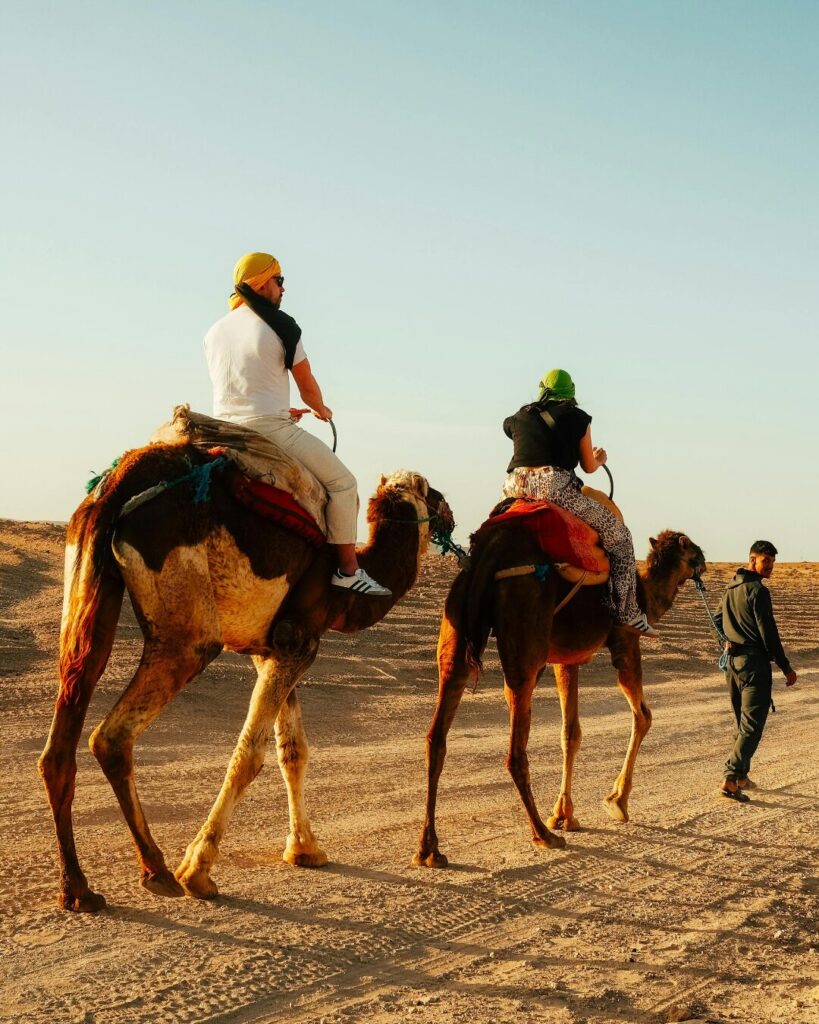
- The Sahara at Merzouga: the Erg Chebbi dune field rises to 500 feet and runs for miles. A private two-night desert camp, reached by camel at sunset and again at sunrise, is the way to actually experience it rather than pass through.
- Essaouira: a blue-and-white fortified Atlantic port town with steady trade winds, which made it one of the world's premier windsurfing destinations, a slower pace than the interior cities, and a seafood-driven food scene worth building a full day around.
- Same-sex relationships are criminalized in Morocco under Article 489 of the Penal Code, with penalties of up to three years in prison.
- Enforcement has historically been inconsistent, but the legal risk is real, and LGBTQ+ travelers should exercise extreme discretion.
- Public displays of affection are culturally restricted for any couple.
- Morocco isn't recommended for travelers unwilling to be fully discreet throughout the trip.
- The travel experiences themselves, the medinas, the desert, the culture, are outstanding. The social environment is a separate and serious consideration, worth being honest about upfront.
- March through May and September through November are the strongest windows.
- Spring brings wildflowers to the Atlas Mountains and comfortable temperatures nationwide, 65 to 80°F.
- Autumn runs similar, with the added texture of post-harvest activity across the countryside.
- June through August: Marrakech regularly exceeds 100°F, and the Sahara reaches 120°F, worth planning around rather than fighting through.
- December through February: cooler, 50 to 65°F in Marrakech and cold in the Atlas Mountains, with clear winter light that photographs beautifully, though some mountain passes need 4WD.
- Ramadan shifts annually on the lunar calendar and changes the pace of the country noticeably during the month.
7-Day Itinerary
Imperial Cities & Sahara
Day 1 — Arrive Casablanca / Fez
Fly into CMN. Train to Fez (3.5 hours on the ONCF; comfortable, reliable). Evening arrival. Walk the medina edge at night with a guide.
Day 2 — Fez el-Bali
Full day in the medina with a certified guide — essential for navigation and context. Chouara Tannery from the rooftop terrace. Bou Inania Madrasa. The Souk des Épices. The Andalusian Mosque (exterior). Al-Attarine Madrasa for the carved stucco and cedar woodwork. Lunch at a riad restaurant.
Day 3 — Fez to Merzouga (Sahara)
Long driving day (7–8 hours) through the Middle Atlas (Ifrane, the Cedrus forest, the cedar tree colony — the Barbary macaques are here and will come to the car). Cross the Ziz Gorges. Arrive Merzouga for the late afternoon.
Day 4 — Sahara
Camel departure from Merzouga at 4 p.m. One-hour ride to the dune camp. Sunset from the 500-foot dune ridge. Stars at altitude in the desert, with no light pollution. Sunrise from the same ridge the next morning — the dunes change color from pink to gold as the light reaches them.
Day 5 — Dades Valley / Aït Benhaddou
Return to Merzouga and drive west through the Draa Valley. The Todra Gorge (300-foot canyon walls, 30-foot width at the narrowest — a 30-minute stop minimum). Aït Benhaddou — the UNESCO-listed ksar (fortified village) that served as the filming location for Gladiator, Lawrence of Arabia, and Game of Thrones. Overnight near Ouarzazate.
Day 6 — Marrakech
Three-hour drive or short flight to Marrakech. Afternoon: the Saadian Tombs (discovered in 1917 sealed behind a wall — 66 royal tombs with carved Italian Carrara marble and cedar ceilings). The Bahia Palace (a 19th-century grand riad with painted cedarwood ceilings). Djemaa el-Fna in the evening.
Day 7 — Marrakech / Depart
Morning: the Jardin Majorelle (the cobalt-blue garden created by Yves Saint Laurent; arrives crowded by 10 a.m. — go at 9). Fly home from RAK.